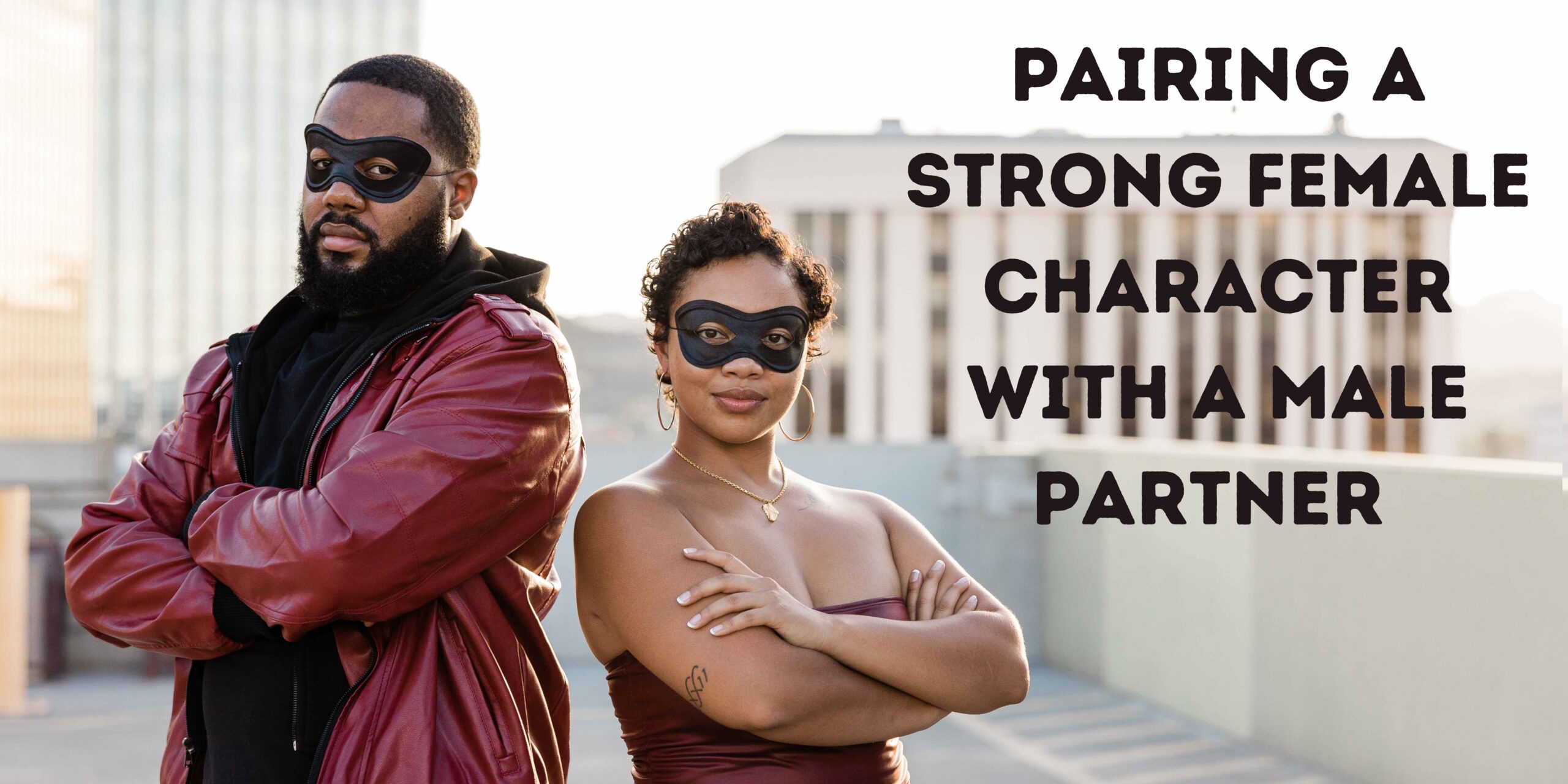
A while back, I was on a writing panel where someone in the audience asked about what they considered the problem of a male character in a work with a strong female protagonist. Their concern was that the male character might appear weak beside her.
First off, why is it that strong women and men cannot be seen as equals? Why must one appear weak if the other is strong? And, for all that is sane, why is the concern about a male character appearing weak just because there is a strong female character in the same story? Seriously! Why is it still so hard for some people to see men and women as being able to work together as a team?
Aside from that, like real people, our characters must have both strengths and weaknesses to be fully realized. We humans are, for the most part, multifaceted creatures, full of dichotomous urges and counterpointed motivations, even when we appear to be single-minded and focused. Arrogance and pride can often be a mask for self-doubt and loathing. We can be like clowns with faces painted to reflect the opposite of what we feel inside. The same holds true for well-developed characters.
Pairing up two characters with an array of strengths and weaknesses that can play off and support one another can create the most incredible partnerships. Or the worst ones, depending on the story you wish to tell.
To me, it’s an issue of balance and of ensuring that characters remain true to who they are and portraying them as fully formed humans. There are also differing aspects and levels of strength to consider, such as a physical weakness as opposed to personal weaknesses or character flaws. I have seen examples of capable men partnered with equally capable women, yet those characters, no matter their strengths, must also have weaknesses and flaws to make them wholly human and believable.
That said, I had the opposite problem when I came to the point in my series, The Healer’s Legacy, where my protagonist, Kira, had teamed up with her partner, Milos. I found myself floundering at first with what to do with him. Up until then, it had been Kira’s story, Kira’s journey. I had now added a strong male character to the mix. How could I make the new journey work without losing Kira’s focus, without Milos becoming too central to the story?
What I discovered was that by allowing the characters to be true to themselves and letting them have a real relationship with one another, by exposing the characters’ flaws and imperfections, and letting them experience the challenges and misunderstandings that are possible in a still new relationship, I had fodder for conflict and a richer, more emotional story than I might have otherwise. I just put my two, strong characters into a sticky situation, stood back, and watched what happened next. What I found is that some of their difficulties arose not only out of their weaknesses and flaws, but out of their strengths, as well.
Things got really interesting, and the journey became richer for having two competent, strong, iron-willed individuals figuring out how to work as a team. And they were ultimately able to find balance in their relationship.
Bottom Line: Strong female and male characters don’t weaken each other—they deepen stories through balance, flaws, and teamwork that create richer, more compelling narratives.
* * *
To get content like this sent direct to your inbox, sign up for my monthly newsletter.
Or follow me on Substack.
For more information on Book Coaching, check out my FAQ page.
If you’re interested in what I write, check out my Author site.
And if you write or want to write children’s books, give the Coaching KidLit podcast a listen.