Effective Stakes Are Always Personal
When writers hear that they need to raise the stakes, they often think that means larger conflicts, epic battles, or more dramatic physical threats. But bigger doesn’t always equate to better. In fact, a world-ending catastrophe won’t mean much your to readers if it doesn’t matter deeply to your character(s).
Yes, it’s great to have big external stakes. They can certainly create an exciting story. But in most stories, the most effective stakes are always personal.
What Are Stakes, Really?
The stakes in your story have to do with what the protagonist stands to win or lose.
They aren’t the external event itself but the personal consequences that event will have on the character.
Consider the following circumstances:
- The killer may escape justice.
- The king may die and the kingdom fall.
- The asteroid may hit Earth.
- The company may go bankrupt.
These feel like big stakes. But how the outcomes affect the character is what most readers care about. The stakes become compelling when we understand what those outcomes mean to a specific character. In other words, when we make it personal.
This is why filmmakers don’t just show epic battles being fought on the screen, they intersperse the wide shots with close-ups of individuals struggling to survive and to win. They show the personal cost.
Why Readers Care About Personal Stakes
Readers connect with and relate to people, not events.
Your reader may never catch a killer, save a kingdom, rescue a school bus full of children, or fly on the back of a dragon. But they understand:
- Fear of falling
- Fear of rejection
- Fear of loss
- Desire to belong
- Desire to protect loved ones
- Desire to feel worthy
This is why I tell my writers not to write what they know, but to write what they feel. Universal emotions make readers care.
The Difference Between External and Personal Stakes
External Stakes
What happens in the world if the protagonist fails?
- The villain wins.
- The mission fails.
- The secret is exposed.
- The treasure stays buried.
Personal Stakes
What happens to the protagonist emotionally if they fail?
- They lose the love of their life.
- They confirm the (mis)belief that they aren’t good enough.
- They betray someone they love.
- They lose their chance to belong.
As with the note above about how filmmakers make epic battles personal, the strongest stories connect the external stakes directly to personal ones.
Personal Stakes Reveal Character
The question writers should ask about the external stakes is:
“Why does this matter to this character?”
Not, why does it matter generally, or why should the reader care?
Instead, we need to consider what the situation/outcome/consequence means specifically to the character and why it matters to them.
How do/will they feel about it? How will it effect them personally?
The answers to these questions often reveal a character’s deepest wound, fear, need, misbelief, or desire. This puts the reader inside the character, makes the character relatable, and someone whose journey we care about.
Raising the Stakes Isn’t About Bigger Explosions
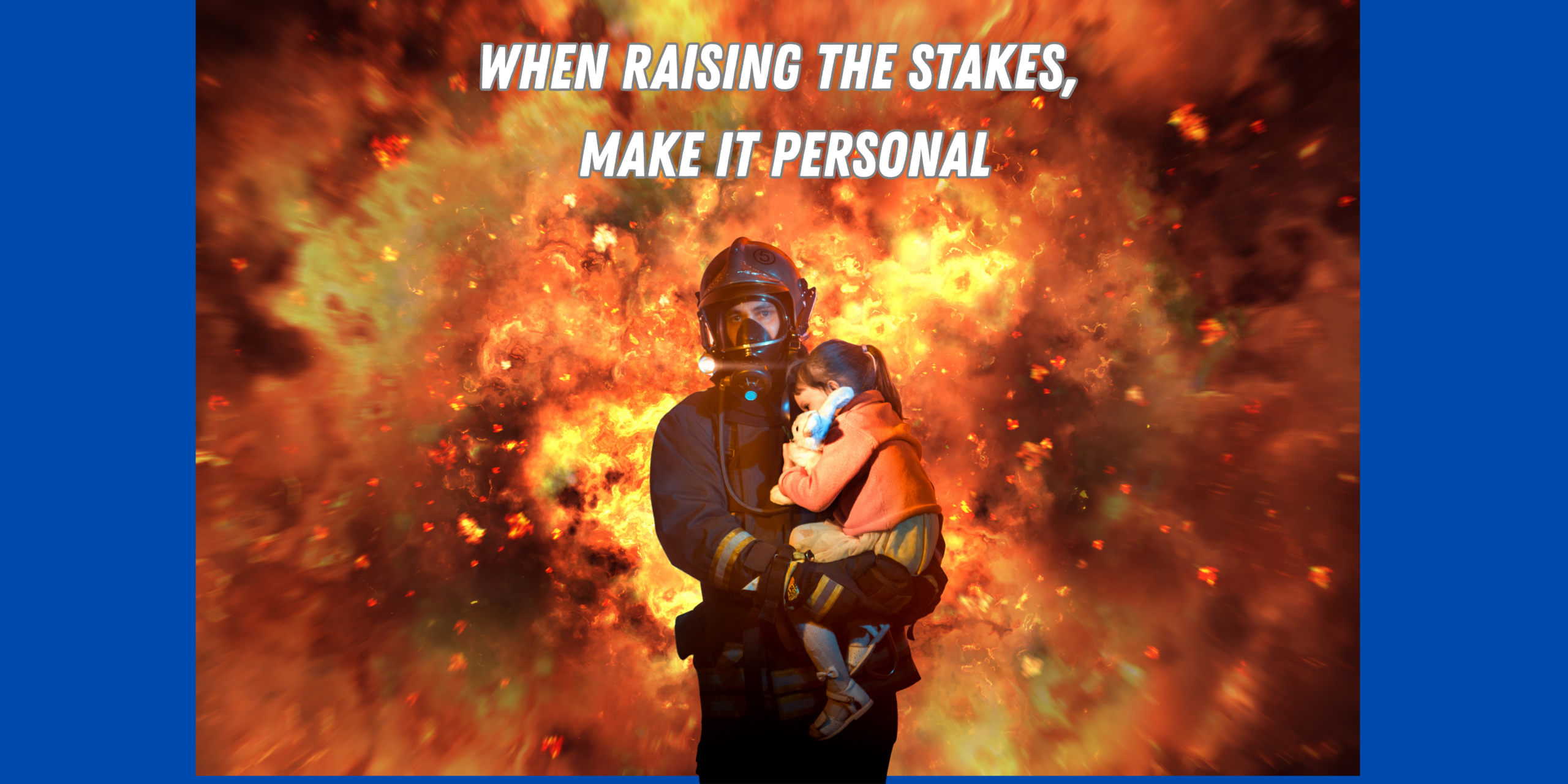
While there is nothing wrong with adding more physical danger to a situation to keep the tension ramped up, making the consequences more personal, whether the physical threat is big or small, will increase reader engagement.
Instead of increasing the physical threat, help us understand why it matters to the character.
What if saving the city is the only way to save the person who gave them a home when they needed it?
Will winning the competition prove something to the protagonist?
Will finding the treasure force them to confront what they’ve been running from?
The emotional consequences are often more powerful than the physical ones. And sometimes failure is what makes a character grow and or change. (Villain origination stories often stem from personal loss.)
Wants and Needs and Fears, Oh My!
Ask yourself these questions when looking for ways to raise the stakes in your story:
- What does my character fear losing most?
- What does my character desperately want?
- How does the central conflict threaten that desire?
- What emotional wound or misbelief is being exposed?
- How and why would failure hurt this character?
Readers Remember What’s Personal
Readers rarely remember stories because the explosions were bigger or the dangers more dramatic. They remember stories because they cared about the character they followed through the conflicts.
The world may be at risk. The kingdom may hang in the balance.
But what keeps readers turning pages is the answer to a much smaller question:
What will this mean to the character if they win, but more importantly what will it mean to them if they fail?
* * *
For more information on Book Coaching, check out my FAQ page.
If you’re interested in what I write, check out my Author site.
And if you write or want to write children’s books, give the Coaching KidLit podcast a listen.